Table of Contents
The road traffic system consists of the following four elements:
- road users - drivers of motorised and non-motorised vehicles, pedestrians, cyclists, passengers, animal riders and drovers;
- the traffic environment - the road and its surroundings;
- vehicles - cars, trucks, buses, tractors, animal-drawn vehicles; and
- rules of the road and road traffic signs - as defined in the Road Traffic Act and regulations - regulating and controlling the interaction of road-users, vehicles and the environment.
As you move around in this system, you have to pay closer attention to the road and the information given by markings, signs and the signals on and along the road. You have to observe and take into consideration the behaviour of other road users, just as they have to observe and take yours into consideration. In this way, you influence each other's behaviour as you interact on the road.
This part of the Code deals with road safety considerations of a more or less general nature and is, therefore, relevant to all road users. Remember that very few people can successfully do two things at the same time, and no one can use the road safely unless all their faculties are consciously directed towards doing so.
Keep this in mind and assist others by avoiding (doing or saying) anything that may distract their attention.
No one should be using the road if they are in a temper, excited or upset. Try, therefore, to develop in yourself and others a calm frame of mind conducive to safe behaviour on the road.
Do not make unnecessary noise or do anything else which may irritate others. When someone else appears to be behaving recklessly or inappropriately, control yourself and never retaliate; it is both degrading and dangerous.
Vehicles displaying "L" plates are in the charge of learners and inexperienced drivers and riders; be wary of them, and give them a chance. Be patient with old people, the blind and the infirm and assist them where possible, for they have a special problem in negotiating traffic.
If you are not fit, do not venture into complicated traffic situations. Narcotic drugs and alcohol impair your judgment. Stay off the roads if you are under their influence.
NEVER VENTURE WHERE YOU CANNOT SEE.
2.1 FOR ROAD USERS ON WHEELS
These road- users are the drivers or riders, as the case may be, of motorcars, trucks, heavy motor vehicles, buses, motor- cycles, and power or pedallpropelled bicycles and tricycles. Whilst the principles of good road behaviour are basically the same for them all, it does not follow that the proper negotiation of all traffic situations is likewise so.
The self- propelled vehicle is the most lethal of those using our roads, and therefore its driver has a special responsibility in respect of the comparatively unprotected cyclist or pedestrian.
Although the mere thought of killing is abhorrent to you, the country's road death toll is evidence that thousands of drivers, with feelings no different from yours, are haunted by memories of traffic deaths in which they have been involved. Study this Code and reduce the risk of a similar predicament.
2.2 YOUR EVERYDAY DRIVING
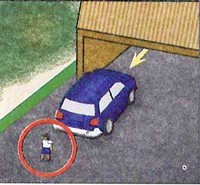 Make it a habit never to set your vehicle in motion until you have looked around and under it for children and animals.
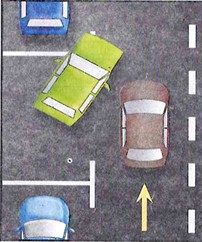 Do not move your vehicle from a parking place until the road is clear, or you are certain that you can do so safely without causing danger to other vehicles.
Keep to your side, the left side of the road
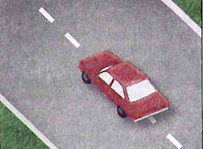 Once on the road, keep as near to the left of it as possible, especially if you are driving slowly, unless, of course, you are about to OVERTAKE or TURN RIGHT.
Never drive on the crown of the road. Never travel on the wrong side of the road.
Keep left sign: R103
| Sign Code | Colours | Description |
|---|---|---|
| R103 | Border and arrow: White retro-reflective Background: Blue retro-reflective | This sign indicates to the driver of a vehicle to pass to the left-hand side only, of an obstacle on the roadway on which such sign has been placed, as indicated by the arrow. |
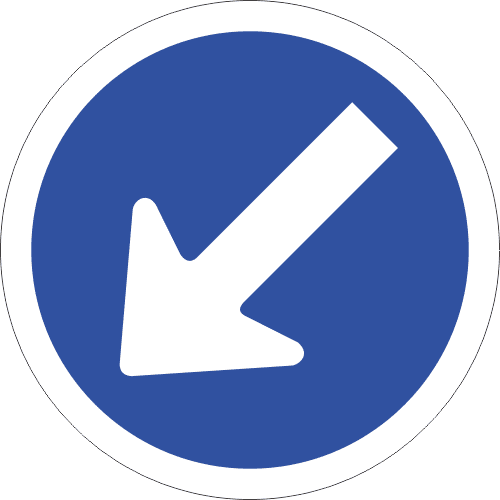 R103 Keep left sign
Unless the police, road markings or other traffic controls specially require you to do so, never cross from your side so as to encroach on the opposite side of the road:
(i) in violation of road markings or other traffic control devices;
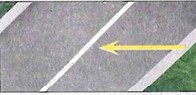 Do not cross this continous line
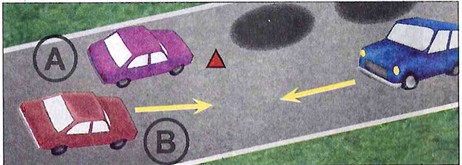 Do not behave like B, give way A has.
(ii) in the face of oncoming traffic; (iii) by making a right- hand turn or U- turn in front of oncoming traffic; (iv) when you cannot see enough of the road ahead to be sure that you have ample time to return to your correct "well left" position if traffic should suddenly appear;
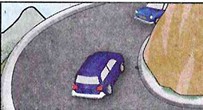 Do not cut the blind corners.
Do not cut the blind corners.
Do not cut the blind corners.
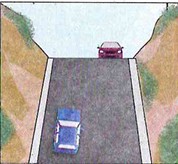 Keep well left on blind rises.
Keep well left on blind rises.
Keep well left on blind rises.
(v) at or on approaching any road intersection, railway level crossing, bridge, tunnel, etc.
Crossroad sign: W101
| Sign Code | Colours | Description |
|---|---|---|
| W101 | Triangle: Red retro-reflective Symbol: Black semi-matt Background: White retro-reflective | This sign warns a road user that there is a crossroad ahead. |
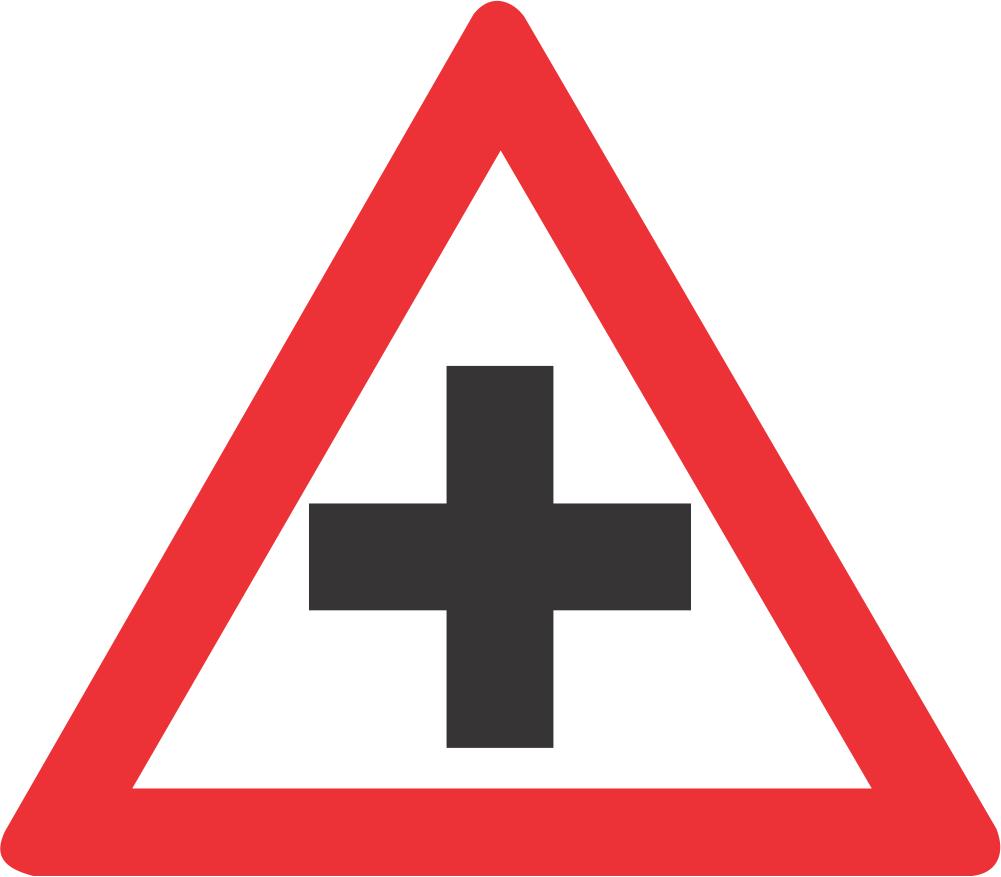 Crossroad sign
2.3 MEETING OTHER VEHICLES
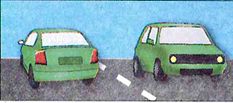 When you meet oncoming vehicles, keep well to your side of the road.
 On strip roads your offside (right- hand) wheels should be on the left- hand strip. Motor cyclists are entitled to use of one strip.
On single lane (narrow) tarmac roads, move sufficiently far to your left to allow the other vehicle room to pass safely. As there is not enough room on these narrow surfaces for two cars, your nearside (left- hand) wheels should be well on the gravel verges of the road
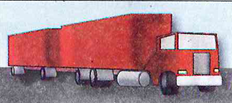 A heavy vehicle might be drawing a trailer. Keep well clear until the whole train has passed.
2.4 TRAVELLING BEHIND OTHER VEHICLES
The risk of collisions or the need to take necessary preventive action will be substantially reduced if you try to anticipate what the driver in front is going to do. Keep a safe following distance and a sharp look- out for any hand, mechanical or light signals he or she may make to indicate his or her intention to slow down or turn.
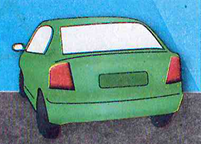 Watch the stop- light.
Remember that the higher the speed your vehicle is travelling, the greater the distance before you can stop. For every 15km/h (10 miles per hour) of your vehicle's speed, allow a gap of at least one vehicle length between your vehicle and the one in front:
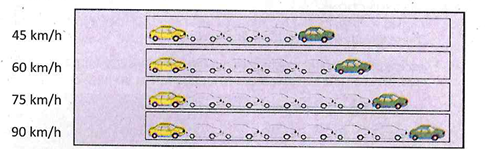 Increase these gaps in bad light and on wet or dirt roads.
2.5 KEEP TO YOUR LANE
If your side of the road is divided into traffic lanes by road markings, choose the proper lane for your route and stay in it until you have good reason to move to another.
Do not cut in from one lane to another, even if the traffic in your lane has slowed down.
Changing your position on the road (changing lane)
Before you move right or left from the lane or the stream of traffic you are in:
(i) make sure that it is safe to do so, and will not inconvenience other traffic; (ii) check on the position of the following traffic, give the signal: "I am going to move over to the left" or "I am going to move over to the right", and be sure that your signal has been understood before you move over; and (iii) ensure that you always check your blind spot before you do so.
2.6 WHEN VEHICLES WISH TO OVERTAKE YOU
If you have been watching the road behind you, by frequently glancing in your rear- view mirror, as you always should, you will be aware if there is a vehicle behind wanting to overtake you.
Give the driver the opportunity to do so by moving carefully over to the left. If the way ahead is clear, and there is sufficient space in front of you for the overtaking vehicle to move back to the left after passing you, you may signal that you are ready to be overtaken.
2.7. ROAD JUNCTIONS
(These include intersections and access points).
Incorrect behaviour at road junctions often results in collisions. Therefore, never make or act on last- minute decisions; rather overrun the junction and return to it.
Approaching road junctions
Decide what you intend doing at the junction ahead in sufficient time for you to take your correct position on the road.
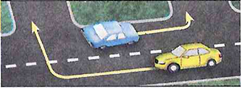 Your correct position for a LEFT TURN is as far to the LEFT of the road as possible, and for a RIGHT TURN as far to the RIGHT of your side of the road as possible.
If your side of the road has been divided by markings, your correct lane is as shown under "Other Road Markings".
Moving into position at road junctions
Do not deviate from the lane or stream of traffic you are in to move into your correct position before you have taken all the steps and precautions given for "changing lane".
Since traffic movement at junctions is more complicated, it is particularly important to anticipate the course of both traffic ahead of and behind you, so keep a sharp lookout for signals indicating intention.
Even when you are in your correct positions for negotiating the junctions, signal your intention if you intend to turn by giving the signal: "I am going to turn right".
Before entering a junction, SLOW DOWN, and even stop if necessary, so as to give precedence to traffic that enjoys the right of way.
Entering and negotiating junctions
Do not enter a junction unless you are satisfied not only that you have the right to enter it, but also that it is safe to do so.
It is always dangerous to overtake at a junction, as your vision is usually partly obscured. In fact, it is an offence to overtake at a junction unless:
(i) the side road is controlled by a stop or yield sign AND your road has more than two traffic lanes; or (ii) the traffic is being controlled by a normal traffic signal or police officer; or (iii) the driver of the other vehicle has indicated his or her intention to turn.
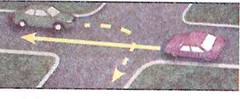 NEVER TURN RIGHT in front of ONCOMING traffic.
How to turn
If you wish to make either a left turn or a right turn, here is how you do it:
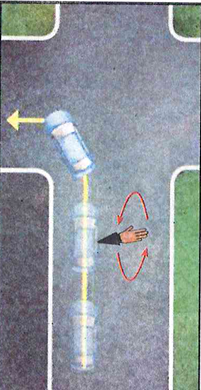 Left Turn
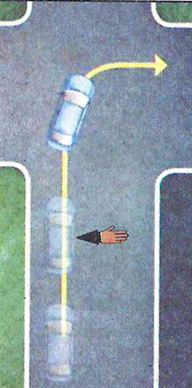 Right Turn
Box junctions
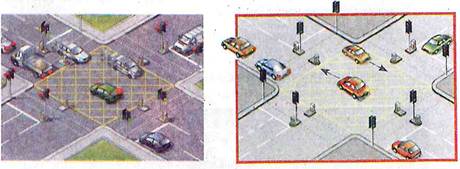 At box junctions, you MUST NOT enter the box until your exit road or lane is clear.
Traffic circles
When you come to a traffic circle around which traffic is already circulating, you must always give precedence to such traffic. It has absolute priority. This does not mean that before entering the traffic circle you must necessarily wait for all the circulating traffic to exit the intersection. You may enter the circle ahead of vehicles already circulating, provided that you can do so without getting in their way, or causing any of the drivers of these vehicles to brake to take avoiding action.
As the movement in a traffic circle is necessarily complex, inevitably entailing a certain degree of "weaving" to enable drivers to make their way to their intended exit points, a high degree of alertness and consideration for other drivers in the circle is required and imperative.
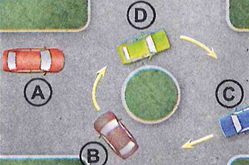 C may enter as he or she has sufficient room to do so without interfering with D. A must not enter the circle as he or she will interfere with B
2.8 YIELDING PRECEDENCE
Upon approaching an intersection, you must give precedence to vehicles (including cycles) approaching you on a road to your right, unless the intersection is controlled by a STOP or YIELD signs, TRAFFIC LIGHTS, or a police officer.
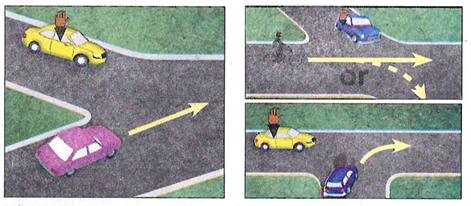 When you enter a major road from a minor one, give precedence to all cross traffic.
It is dangerous to assume that because another road- user should yield precedence to you, he or she will necessarily do so.
Remember, a red light, yield or stop sign does not give anyone a right of way - it only takes away certain rights from traffic facing them.
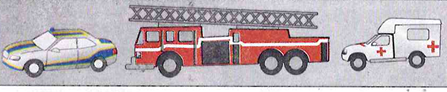 A fire- engine, ambulance or police vehicle sounding its special warning device or operating its flashing beacon takes precedence over all other traffic; move out of its course and stop. Remain stationary until it has passed.
2.9 OVERTAKING OTHER VEHICLES
Overtaking prohibited sign: R214
 Overtaking prohibited sign
| Sign Code | Colours | Description |
|---|---|---|
| R214 | Border and diagonal: Red retro-reflective Symbol: Black semi-matt Background: White retro-reflective | (a) indicates to the driver of a vehicle that he or she shall not overtake another vehicle travelling in the same direction. (b) the prohibition on overtaking is effective for a distance of 500 metres beyond such sign. |
Overtaking by goods vehicle prohibited sign
 Overtaking by goods vehicle prohibited sign
| Sign Code | Colours | Description |
|---|---|---|
| R215 | Border and diagonal: Red retro-reflective Symbol: Black semi-matt Background: White retro-reflective | (a) indicates to the driver of a goods vehicle that he or she shall not overtake another goods vehicle travelling in the same direction; (b) the prohibition on overtaking is effective for a distance of 500 metres beyond such sign. |
The desire to overtake for the sake of it can become an obsession. FIGHT IT.
If you have a good reason to overtake another vehicle, pass it only on its RIGHT.
Provided that you are absolutely certain you can do so without endangering yourself or others, this rule for passing may be relaxed, for instance:
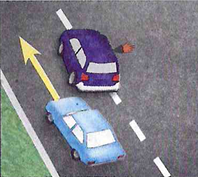 Multi-lane passing
if your side of the road has two or more traffic lanes;
or
if the driver ahead has signalled that he or she is turning right.
if, under these permissive circumstances you intend passing on the LEFT, be warned:
-
that you should not do so if it means encroaching on the shoulder of the road, or if the full width of the traffic lane on your left is not clear, so that you have to encroach on an occupied lane; and
-
that none of these circumstances in any way exempts you from the rules governing your approach to road junctions and entry into them.
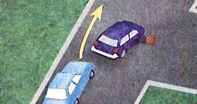 Do not overtake on the road shoulders.
Do not overtake on the road shoulders.
Do not overtake on the road shoulders.
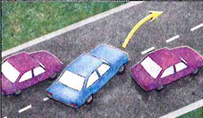 Do not "jump" lanes. Make sure the road is clear.
Do NOT move either to the right or left from your lane or stream of traffic, in anticipation of overtaking, BEFORE:
- you have seen that the road ahead is clear of traffic;
- you have taken all the precautions for changing lanes;
- you have warned the driver ahead that you want to pass him or her; and you have checked his or her speed and satisfied yourself that you can successfully overtake without resorting to excessive speed and causing danger to others.
You must not assume that the driver ahead will slow down.
It is your responsibility to ensure that you overtake safely. Encouraging or reassuring signals given by others in no way relieves you of this responsibility.
When it is safe to overtake, the first step is to move gradually into the proper position well before you actually start to overtake whilst also checking your rear view mirror. In this way, you can reassure yourself that the road behind and ahead is still clear.
If it is, check your blind spot, signal right, move into the right lane, accelerate and pass. Get ahead and then ease gently back to the left. If you really have cause to overtake a vehicle, you will now get away and not "hog" the road ahead of it.
If it is not, you will have left yourself enough room to return to your position on the left.
Never overtake:
- in the face of oncoming traffic;
- where road markings or some other traffic control forbid it;
- when visibility is bad (in dust, rain, mist, smoke), and on or approaching blind corners or blind rises. (If you can't see, do not attempt to overtake);
- another vehicle that has slowed down or stopped to let pedestrians or other traffic pass;
- on or approaching restrictions to traffic flow, such as bridges, flyovers, tunnels, etc.;
- on or approaching level crossings; and
- at pedestrian crossings.
2.10 SPEED
Speed limits are the MAXIMUM speeds allowed by law. They are not necessarily safe speeds at all times.
Speed limits in Zimbabwe are expressed in kilometres per hour (km/hr). The signs do not have to remind you of this unit of speed.
Speed limit sign: R201
 Speed limit sign
| Sign Code | Colours | Description |
|---|---|---|
| R201 | Border: Red retro-reflective Figures: Black semi-matt Background: White retro-reflective | This sign indicates to the driver of a vehicle that the speed limit beyond such sign is the speed indicated in kilometres per hour, by means of a number on such sign, and that he or she shall not exceed such speed limit. |
The speed limit on the section of road beyond this sign is 100 kilometres per hour.
De-restriction Signs: (R)600
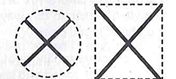 De-restriction Signs
| Sign Code | Description |
|---|---|
| (R)600 | (a) A de-restriction sign indicates to the driver of a vehicle that he or she no longer has to comply with the regulatory message displayed under the red cancellation cross on the sign. |
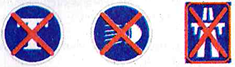 Examples of de-restriction signs
Obligations and Precautionary Measures by Drivers or Riders of all Classes of Vehicles
For safety reasons, you must adjust your speed to suit the weather, light, road, traffic conditions and your ability to control the vehicle.
Reduce Speed
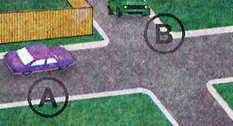 Reduce Speed
A cannot see B. Reduce Speed.
Reduce Speed
A cannot see B. Reduce Speed.
- at night and dusk;
- in rain, mist, smoke, windy weather or dust;
- if dazzled by bright sunlight;
- as you approach an intersection;
- at a level crossing or bridge;
- on narrow, winding roads, even if you know them well, for you never know what may be round the corner;
- when you meet another vehicle on a narrow or strip road;
- when approaching school entrances and exits, and be on the lookout for school children;
- as you approach a pedestrian crossing; and
- when you meet animals or there is the possibility of meeting them.
At high speed, you need more room to stop. In an emergency, high speed increases the chances of skids, roll- overs and serious injury, and reduces your chances of negotiation and escape.
Upon registering danger, it takes the average driver about half of a second to start applying brakes. Thereafter, the greater the speed, the further the vehicle travels. This means that with efficient brakes, the following distance will have been covered before the vehicle can be brought to a stop:
| Speed (km/h) | Reaction Distance | Braking Distance |
|---|---|---|
| 40 km/h | 5.6 m | 12.4 m |
| 60 km/h | 8.3 m | 27.7 m |
| 120 km/h | 16.7 m | 113.3 m |
2.11 REFUELLING
If you stop to refuel, switch off your engine and do not strike matches or smoke while at the petrol pumps. Do not use cellular phones while at a filling station.
Pushing other vehicles
The law does not permit you to push other vehicles with your vehicle.
What has been said thus far in this part of the Code concerns all road users on wheels. What follows deals with the obligations and precautionary measures peculiar to the driver or rider of specific classes of vehicles.
2.12 SIGNALS BY OTHER ROAD-USERS
Let others know what you intend to do by giving clear and correct signals—do not just dangle your arm or hand out of the window. Remember, however, that signalling alone does not necessarily give you the right to carry out your intention; you must be sure that it is safe to do so.
As a general rule, signal well before you brake. NB: Remember, it is no use signalling what you are already doing, you should signal what you are actually going to do.
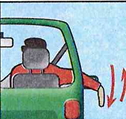 I am going to slow down(1) I am going to slow down(1) | 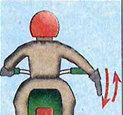 I am going to slow down(2) I am going to slow down(2) |
|---|
To signal your intention to slow down, extend the right arm with the palm of the hand turned downwards, and move the arm slowly up and down keeping the wrist loose.
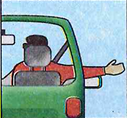 I am going to turn right(1) I am going to turn right(1) | 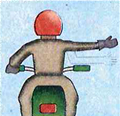 I am going to turn right(2) I am going to turn right(2) |
|---|
To signal your intention to turn to the right, extend the right arm with the palm of the hand turned to the front and hold them rigid in a horizontal position straight out from the offside of the vehicle.
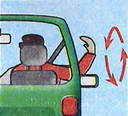 I am going to turn left(1) I am going to turn left(1) | 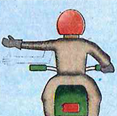 I am going to turn left(2) I am going to turn left(2) |
|---|
To indicate/signal your intention to turn left, extend the right arm and rotate it from the shoulder in an anti- clockwise direction. If you are riding a two- wheeled vehicle, you may signal your intention to turn left by extending the left arm horizontally with the palm of the hand facing forward, or with your upper arm in the downward position and the forearm in the horizontal position. The right arm should be used for right turns.
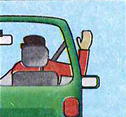 I am going to stop(1) I am going to stop(1) | 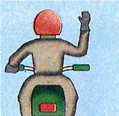 I am going to stop(2) I am going to stop(2) |
|---|
To indicate your intention to stop, extend the right arm with the forearm and hand in a vertical position, and with the palm of the hand turned to the front.
You may indicate to the following traffic that it may overtake you on the right by extending the right arm and hand below shoulder level and moving them backwards and forward.
If your vehicle has direction indicators, you may signal with these, but make sure they are in good working order and that they return to neutral when your turn is complete.
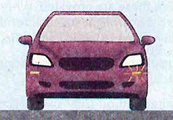 Signal distances(1) Signal distances(1) | 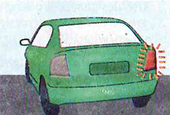 Signal distances(2) Signal distances(2) |
|---|
Signal at least 50 metres before you turn in ordinary city traffic and 100 metres before you turn when travelling at high speed on a main road.