Provisional - Zimbabwe Highway Code, Road Signs & VID Test Prep & lessons

Test 1

Twenty five questions from the 2026 paper, in the order they are set. Read them with the answers, or practise the paper and have your answers marked.

Practise this paper online

Questions
25
Pass mark
22
Practise this paper

Marked at the end, then every answer is shown.

All 25 questions in Test 1

The paper as it is set. Open the fold under a question to read its answer and why that answer is right, or practise the paper and have your answers marked.

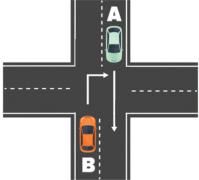
1.

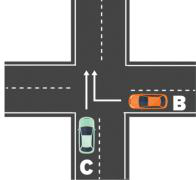
Which car has the right of way?

Diagram for question 1 of Zimbabwe VID test paper 1
  1. ACar C
  2. BCar B
  3. CCar A
Show the answer

Answer: Car B

At an uncontrolled crossroads you give way to traffic on your right. Car C is coming up the bottom road to go straight ahead, and Car B is coming in from the road on C's right and turning up into the same road. Car B goes first.
2.

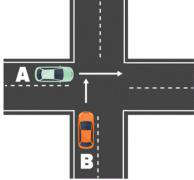
Which car gives right of way?

Diagram for question 2 of Zimbabwe VID test paper 1
  1. ACar C
  2. BCar B
  3. CCar A
Show the answer

Answer: Car A

Car A is travelling from left to right across the picture and Car B is coming up from the bottom road, on A's right. At an uncontrolled crossroads the vehicle on your right has right of way, so Car A waits for Car B.

3.

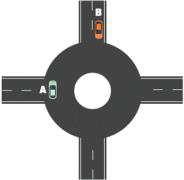
Which car should stop? (A traffic circle)

Diagram for question 3 of Zimbabwe VID test paper 1
  1. ACar A
  2. BCar C
  3. CCar B
Show the answer

Answer: Car B

Car A is already on the circle, entering from the left hand road, while Car B is still on the approach from the top. You give way to traffic already on a circle and to traffic on your right, and Car A is on Car B's right, so Car B stops.

4.

Which car gives right of way?

Diagram for question 4 of Zimbabwe VID test paper 1
  1. ACar B
  2. BCar C
  3. CCar A
Show the answer

Answer: Car B

Car B is at the bottom of the picture with its arrow curving right, across the path of Car A, which is coming straight down the other side of the road. A vehicle turning right gives way to oncoming traffic going straight, so Car B waits.

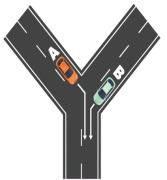
5.

Which car gives right of way?

Diagram for question 5 of Zimbabwe VID test paper 1
  1. ACar A
  2. BCar B
  3. CCar C
Show the answer

Answer: Car B

The two roads merge into one. Car A is coming down the left hand fork and Car B down the right hand fork, which puts Car A on Car B's right. Traffic on your right has right of way, so Car B gives way and goes in behind.

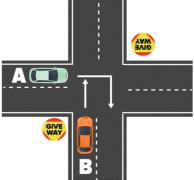
6.

Which car is breaking the law assuming both are moving?

Diagram for question 6 of Zimbabwe VID test paper 1
  1. ACar B
  2. BCar A
  3. CCar C
Show the answer

Answer: Car B

A give way sign faces Car B, so B gives precedence to the road it is crossing. The green car is coming along that road from the left and turning right into the road B is on. B drives in anyway, so Car B is breaking the law.

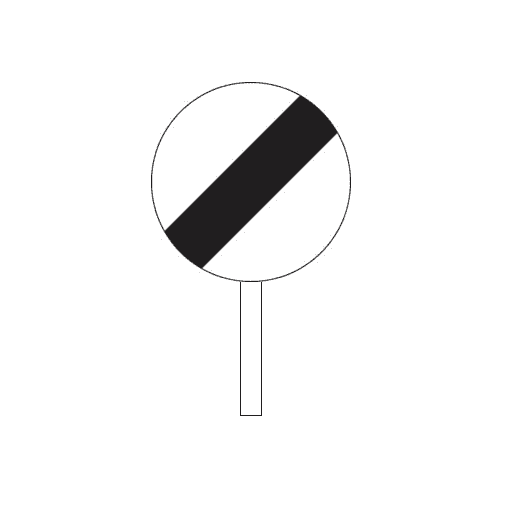
7.

The sign indicates:

Diagram for question 7 of Zimbabwe VID test paper 1
  1. AHospital ahead.
  2. BEnd of speed restriction
  3. CBroken down vehicle ahead
Show the answer

Answer: End of speed restriction

A white circle crossed by a single black diagonal band is the derestriction sign. It marks the end of the speed restriction you have been driving under, and the general limit for that road applies again.

8.

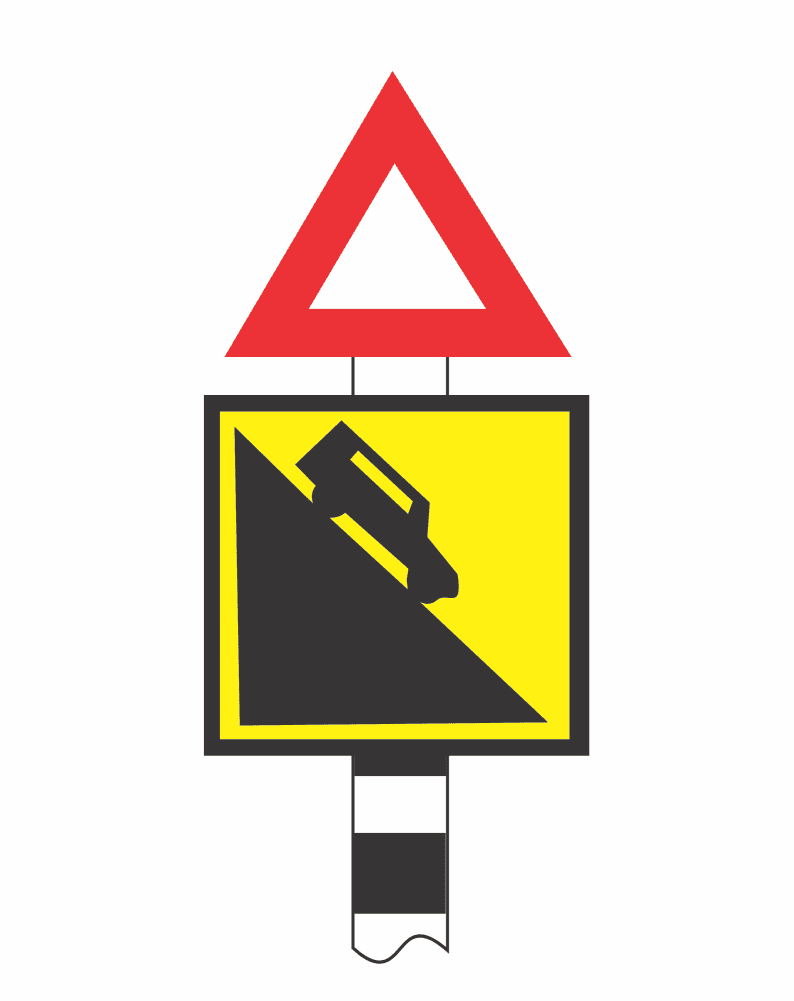
When approaching this sign, I should:

Diagram for question 8 of Zimbabwe VID test paper 1
  1. ADisengage gears.
  2. BEngage a lower gear
  3. CApply hand brake
Show the answer

Answer: Engage a lower gear

The yellow plate shows a vehicle with its front pointing down on a steep slope: a steep descent ahead. Engage a lower gear before you start down so the engine holds the vehicle back. Rolling along with the gears disengaged leaves you only the brakes to stop with.

9.

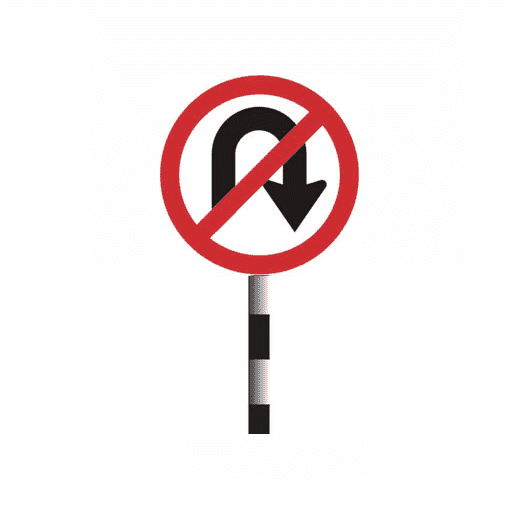
The sign indicates I am:

Diagram for question 9 of Zimbabwe VID test paper 1
  1. APermitted to make a 'U' turn
  2. BProhibited from making a 'U' turn
  3. CProhibited from turning right
Show the answer

Answer: Prohibited from making a 'U' turn

Inside the red circle is an arrow doubling back on itself, and a red bar strikes through it. A red circle prohibits, so no U turn may be made here. It is not the right turn that is stopped, it is turning back the way you came.

10.

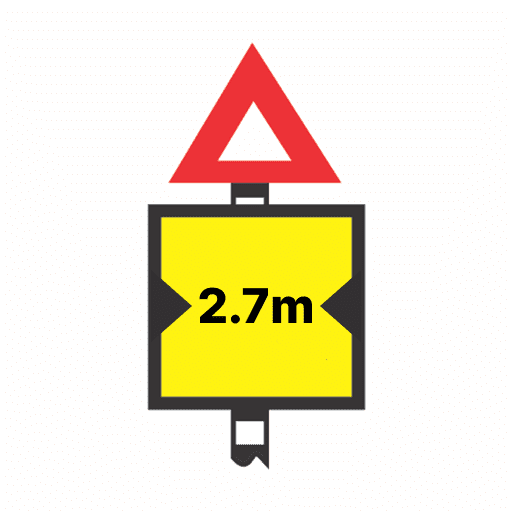
This sign indicates:

Diagram for question 10 of Zimbabwe VID test paper 1
  1. AWidth restriction
  2. BHeight restriction
  3. CCattle ahead
Show the answer

Answer: Width restriction

The black arrows on the yellow plate point in from both sides, which measures across the road, and the plate reads 2.7m. That is a width restriction: nothing wider than 2.7 metres may pass. A height limit points down from above.

11.

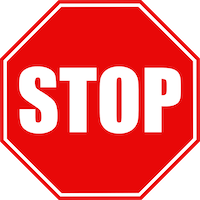
At this sign I should:

Diagram for question 11 of Zimbabwe VID test paper 1
  1. AStop, and only proceed when the road is clear on both sides
  2. BStop, and only proceed when the road is clear on the right
  3. CStop, and only proceed when the road is clear on the left
Show the answer

Answer: Stop, and only proceed when the road is clear on both sides

The red octagon is the stop sign. Bring the vehicle to a complete stop at the line whether or not anything is coming, then look both ways and move off only once the road is clear on both sides.

12.

This sign indicates that I:

Diagram for question 12 of Zimbabwe VID test paper 1
  1. AMay not park my vehicle
  2. BMay park my vehicle
  3. CExpect 'Lay-by' ahead
Show the answer

Answer: May not park my vehicle

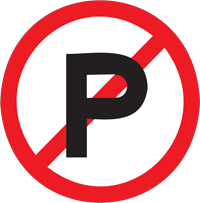
The red circle and red bar over the letter P prohibit parking on this length of road. Leaving your vehicle standing here is an offence, whether or not there is room for other traffic to get past.

13.

A heavy vehicle may tow not more than:

  1. AOne trailer
  2. BThree trailers
  3. CTwo trailers
Show the answer

Answer: Three trailers

The Code says you must not tow more than three trailers, so three is the most a heavy vehicle may draw. Each extra trailer lengthens the load and the room it needs to stop and to clear an intersection, which is why the number is capped and not left to the driver.

14.

When carrying a passenger on my motorcycle, I must:

  1. AHave headlamps fitted
  2. BHave the petrol tank filled
  3. CHave a pillion and foot rests firmly fixed
Show the answer

Answer: Have a pillion and foot rests firmly fixed

You may carry a passenger on a motorcycle only if the machine has a pillion seat and foot rests, both firmly fixed. Without foot rests the passenger has nowhere to put their feet and throws the machine off balance. Headlamps are required at all times, not just when carrying someone.

15.

If involved in a SERIOUS accident, I must:

  1. AReport to a hospital
  2. BReport to police within 48 hours
  3. CReport to police as soon as possible, or within 24 hours.
Show the answer

Answer: Report to police as soon as possible, or within 24 hours.

A serious accident, one where a person is injured or killed, must be reported to the police as soon as possible and in any event within 24 hours. Leave the vehicles where they stopped unless they are a danger to other traffic.

16.

When traveling behind another vehicle at night, I must:

  1. ADip my headlamps
  2. BSwitch on my sidelights
  3. CDrive slowly
Show the answer

Answer: Dip my headlamps

Your main beam fills the mirrors of the vehicle in front and blinds that driver. Dip your headlamps as soon as you close up behind another vehicle at night and keep them dipped until you are past. Sidelights alone do not light the road far enough to drive on.

17.

When should a horn be used?

  1. ATo attract a friend's attention
  2. BWhen warning another road user.
  3. CWhen cattle are blocking the road ahead
Show the answer

Answer: When warning another road user.

The horn is a warning device. Use it to tell another road user you are there when they may not have seen you, and for nothing else. Greeting a friend with it, or hurrying animals along, is not what it is for.

18.

I may park no closer to a corner than:

  1. A9.5 meters
  2. B15 meters
  3. C7.5 meters
Show the answer

Answer: 7.5 meters

Park no closer than 7.5 metres to a corner. Nearer than that, your vehicle hides traffic turning in and blocks the view of drivers coming out, which is why the distance is set rather than left to judgement.

19.

At an intersection with a flashing amber robot, I would:

  1. AWait until the road ahead is clear
  2. BGive right of way to vehicles from the left
  3. CGive right of way to vehicles from the right
Show the answer

Answer: Give right of way to vehicles from the right

A flashing amber robot is not controlling the intersection, so treat it as an uncontrolled one. Slow down, look both ways and give right of way to vehicles coming from your right.

20.

In which circumstances would I proceed against a red robot?

  1. AWhen the green arrow is illuminated
  2. BWhen there is no approaching traffic
  3. CWhen the road is clear on the right
Show the answer

Answer: When the green arrow is illuminated

A red robot means stop, and the one thing that lets you move against it is an illuminated green arrow, and then only in the direction the arrow points. An empty road makes no difference to the red.

21.

Which is the correct robot light sequence?

  1. ARed, Amber, Green
  2. BRed, Green, Amber
  3. CGreen, Red, Amber
Show the answer

Answer: Red, Green, Amber

The cycle runs red, then green, then amber, then back to red. There is no red and amber shown together before green, so the light goes straight from red to green, and the amber comes afterwards to warn you the red is next.

22.

A driver sees a continuous white line in the centre of the road, he or she

  1. AMay cross if there is no oncoming traffic
  2. BMay not cross
  3. CMay cross in rural areas
Show the answer

Answer: May not cross

A continuous white line down the centre of the road may not be crossed or straddled at all. It is painted where the view ahead is too short to overtake safely, so an empty road at that moment tells you nothing about what is coming.

23.

A broken white line beside a continuous white line in the centre of the road indicates that:

  1. AI may overtake if the continuous white line is on my side
  2. BI may overtake if the broken line is on my side
  3. CI must keep well left
Show the answer

Answer: I may overtake if the broken line is on my side

Where a broken line and a continuous line run together, the one on your side of the road governs you. A broken line on your side means you may cross to overtake when it is safe. If the continuous line is on your side, you stay put.

24.

A broken yellow line on the left hand side of the road indicates:

  1. AIt may not be straddled
  2. BIt may be straddled to overtake traffic which is turning right
  3. CIt may be straddled to overtake cyclists
Show the answer

Answer: It may be straddled to overtake traffic which is turning right

The broken yellow line marks off the edge of the roadway on the left. You may straddle it to pass a vehicle that has stopped to turn right, then move back inside it. It is not a lane provided for overtaking anything else.

25.

What must you do when meeting a motor vehicle displaying 'L' plates?

  1. AHoot if the vehicle is blocking your path
  2. BExercise extreme caution
  3. CFlash my headlights
Show the answer

Answer: Exercise extreme caution

L plates mean the driver is still learning and may stall, pull away slowly or take a line you do not expect. Hold back, leave extra room and exercise extreme caution. Hooting or flashing at a learner usually makes matters worse.

Practise on your phone

The app sets the same 16 papers, keeps every attempt, gathers the questions you keep missing into a revision set, and works with no network.