Provisional - Zimbabwe Highway Code, Road Signs & VID Test Prep & lessons

General Knowledge Practice Questions

General knowledge questions cover the basics every Zimbabwe learner driver is expected to know before sitting the VID provisional test, from licensing rules to everyday road sense.

20 questions on this topic, all of them printed below. Answer them all and get marked at the end, or take them one at a time with the answer after each.

Mode

Exam is timed and marked at the end, like the real test. Learn marks each answer as you go and shows the right one.

All 20 general knowledge questions

Every question on this topic, as it is set. Open the fold under a question to read its answer and why that answer is right, or take the quiz above to have your answers marked.

1.

When driving at sunset or dawn on a dark day, what should you do?

  1. ATurn on your lights on low beam
  2. BKeep your sunglasses on to cut down headlight glare
  3. CTurn on your hazard warning lights
Show the answer

Answer: Turn on your lights on low beam

Turn your headlights on whenever the light is poor, not just after dark. Low beam makes you visible at sunset or on a dark day without dazzling drivers coming towards you. Sunglasses cut down what you can see, and hazard lights are a warning that you are stopped or in trouble.
2.

You are driving at night with your headlights on high beam. When should you dip your headlights?

  1. AWhen within 200 metres of an oncoming vehicle only
  2. BWhen within 200 metres of the vehicle ahead or an oncoming one
  3. CNever, you are allowed to drive with your lights on high beam at all times
Show the answer

Answer: When within 200 metres of the vehicle ahead or an oncoming one

Always dip your lights for oncoming traffic and for the vehicle you are following, because high beam blinds the driver ahead through the mirrors just as it blinds one coming at you. The distance this paper works to is 200 metres, either way.

3.

Is it an offence to obstruct clear vision of your number plates?

  1. AYes, at any time
  2. BYes, but it is legal for a towbar or bicycle rack to cover the rear number plate
  3. CNo, you are allowed to cover your number plates if you want to
Show the answer

Answer: Yes, at any time

Your vehicle must be registered and licensed, and the number plate is how it is identified on the road, so it must be readable at all times. This paper allows no exception for a towbar or a bicycle rack. If one covers the rear plate, the number must be shown some other way.

4.

What must you do when you are towing a caravan to help other vehicles overtake?

  1. ADrive at least 25 km/h below the speed limit
  2. BStop immediately and let the faster vehicle overtake
  3. CKeep at least 60 metres behind heavy vehicles or other vehicles towing caravans
Show the answer

Answer: Keep at least 60 metres behind heavy vehicles or other vehicles towing caravans

A caravan sways and hides the road behind you, so keep a long gap and give faster traffic room to come past. The distance this paper works to behind heavy vehicles and other vehicles towing caravans is 60 metres. Driving far below the limit or stopping in the road is not the answer.

5.

Are you permitted to tow a caravan with a person riding in the caravan?

  1. AYes, provided you do not exceed 60 km/h
  2. BNo, not under any circumstances
  3. CYes, if the person(s) in the caravan are over 12 years of age
Show the answer

Answer: No, not under any circumstances

Passengers travel in the seats of the vehicle, never on any other part of it and never in the caravan being towed. A caravan sways under tow and the person inside is out of your sight and out of your reach, so no speed and no age makes it allowed.

6.

Before driving a long distance at fast speed or carrying a full car load, you should

  1. AMake sure you have a street directory, so you know where you are going
  2. BCheck your tyre pressure, and if necessary, increase it to what the manufacturer recommends
  3. CHave a large meal and a cup of coffee to stay alert
Show the answer

Answer: Check your tyre pressure, and if necessary, increase it to what the manufacturer recommends

Check the tyres before a long or fast trip and before you load the car up. Tyres must be inflated to the maker's specification and carry at least 1mm of tread, because a tyre bursting at speed has killed many people. A map and a meal do nothing for the vehicle.

7.

If you are involved in an accident where your vehicle needs to be towed away and the Police do not attend the crash scene, you

  1. ADo not need to report the accident to the Police
  2. BMust report the accident to the Police Station nearest to where the accident happened within 24 hours
  3. COnly need to report the accident to the Police if someone was injured
Show the answer

Answer: Must report the accident to the Police Station nearest to where the accident happened within 24 hours

If you do not give your name and address to the person with grounds to ask for them, you must report the crash at a police station or to a police officer as soon as you reasonably can, and within twenty four hours at the latest. Injury or none, the report is still owed.

8.

If a vehicle you are driving is involved in an accident and a person is injured, what must you do after stopping?

  1. ARender every assistance and take immediate steps to have an ambulance notified. Then call the Police
  2. BOnly call the Police if the accident also resulted in over $500 worth of property damage
  3. CReport the accident to Police within seven days
Show the answer

Answer: Render every assistance and take immediate steps to have an ambulance notified. Then call the Police

Where someone is hurt you must stop, see who has been injured and give all the help you can, which means having an ambulance called first. The report to the police follows. Waiting seven days, or weighing up the damage first, leaves an injured person without help.

9.

You should use your right-hand indicator when

  1. AYou intend to slow down
  2. BYou are about to stop
  3. CYou intend to move to the right, at any time
Show the answer

Answer: You intend to move to the right, at any time

Signal what you are about to do, not what you are already doing. The right indicator says you are moving to the right, whether that is turning right, overtaking or pulling out from the side of the road. Slowing down and stopping have their own signals.

10.

Your car registration expires today. You have your car inspected for registration renewal but it fails the inspection. What should you do?

  1. AYou have seven days to have the car repaired, after which the RTA considers it to be unregistered
  2. BAfter today you must not drive the car until it has been repaired, passed another inspection and registered
  3. CGo to the RTA and ask them to renew your registration and tell them you will soon get the car fixed
Show the answer

Answer: After today you must not drive the car until it has been repaired, passed another inspection and registered

Your vehicle must be registered and roadworthy before you drive it, and driving one that is not is against the law. The registration runs out today and the vehicle has failed its inspection, so it stays where it is until it is repaired, passes another inspection and is registered.

11.

You borrow a friend's car and find that the position of the driver's seat puts you sitting a long way from the steering wheel and controls. What should you do?

  1. APut up with the discomfort; you should not adjust another person's seat
  2. BAsk your friend for a cushion to place behind your back
  3. CAdjust the seat forward so it's right for you
Show the answer

Answer: Adjust the seat forward so it's right for you

You need to reach the wheel and the pedals properly to keep full control, and all adjustments are made before you drive off. The seat moves, so move it forward until it fits you. Sitting stretched out, or propped up on a cushion, leaves you short of the controls.

12.

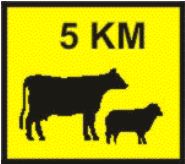
You hold an unrestricted licence and are driving at 100 km/h in the country and pass this sign. What should you do?

Diagram for general knowledge practice question 12
  1. AYou can continue to drive at 100 km/h if there are fences to stop farm animals from getting on the road
  2. BFor the next 5 kilometres you must not exceed 60 km/h unless you pass an end farm animals speed limit sign
  3. CSlow down to a speed that will allow you to stop to avoid crashing into farm animals on the road
Show the answer

Answer: Slow down to a speed that will allow you to stop to avoid crashing into farm animals on the road

The yellow sign warns you that farm animals may be on the road for the next 5 kilometres. It is a warning, not a speed limit, and 5 KM is a distance. Reduce speed whenever you may meet animals, to a speed at which you can stop for one standing in the road.

13.

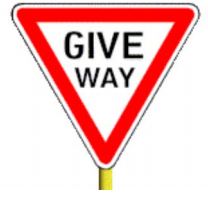
What is meant by this sign on or near a bridge?

Diagram for general knowledge practice question 13
  1. AStop at all times before crossing the bridge and only give way to pedestrians who may be crossing
  2. BSlow down and be prepared to give way to vehicles travelling in the opposite direction
  3. CDo not overtake a vehicle travelling in the same direction
Show the answer

Answer: Slow down and be prepared to give way to vehicles travelling in the opposite direction

The red triangle reading GIVE WAY tells you to slow down, and to stop if you must, giving precedence to other traffic. A bridge narrows the road to one lane, so the traffic you give precedence to is whatever is coming the other way. You do not have to stop every time.

14.

If you see a sign indicating road repairs are going on, you should

  1. AStop immediately and wait for instructions
  2. BMaintain the same speed
  3. CSlow down and watch for traffic controllers and instructions
Show the answer

Answer: Slow down and watch for traffic controllers and instructions

A road repairs sign means the road ahead is not as you expect it. Slow down, look for the further signs that give the detailed instructions, and watch for the people directing traffic, whose instructions you follow. Holding your speed, or stopping dead, puts them and you at risk.

15.

If you see a horse and rider on the road what should you do?

  1. ASound your horn to warn the rider
  2. BSlow down and give them plenty of room
  3. CSpeed up to pass the horse
Show the answer

Answer: Slow down and give them plenty of room

Reduce speed whenever you meet animals on the road. A horse is easily startled, so slow down and leave plenty of room as you pass. The horn is only for safety, and a blast of it, or speeding by, is exactly what frightens a horse and puts the rider on the ground.

16.

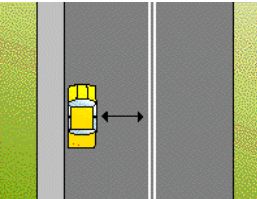
Where there are double dividing lines, you may park

Diagram for general knowledge practice question 16
  1. AAt least three metres from the dividing lines
  2. BAt least two metres from the dividing lines
  3. COne metre from the dividing lines
Show the answer

Answer: At least three metres from the dividing lines

A double continuous line must not be crossed or driven to the right of, so a parked car has to leave traffic room to pass on its own side without straddling it. The picture shows the car at the left edge, the gap measured to the double line. The figure this paper works to is at least three metres from the lines.

17.

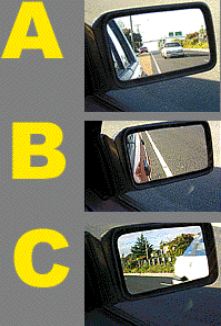
Which side mirror is adjusted best?

Diagram for general knowledge practice question 17
  1. AMirror A
  2. BMirror B
  3. CMirror C
Show the answer

Answer: Mirror A

A side mirror is set to show the lane beside and behind you, with only a thin strip of your own car at the edge. The top mirror does that, and the traffic behind is in it. The middle one is aimed down at the road surface and the bottom one is aimed up and in, so both hide the traffic.

18.

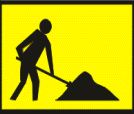
When you come across roadworks

Diagram for general knowledge practice question 18
  1. AYou only have to obey the signs when there are workers about
  2. BYou only have to obey the signs during working hours
  3. CYou must obey the signs that are displayed at all times
Show the answer

Answer: You must obey the signs that are displayed at all times

Road works signs are there for your safety and for the safety of the people working on the road, and they apply for as long as they are up. Obey every one of them, day or night, workers in sight or not, and do not go over any temporary speed limit they set.

19.

Before getting out of your vehicle you must

  1. ACheck your seatbelt is back in place
  2. BCheck your mirrors and blind spots for pedestrians, bicycles or other vehicles
  3. CCheck your headlights are turned off
Show the answer

Answer: Check your mirrors and blind spots for pedestrians, bicycles or other vehicles

Never open a door until the vehicle is stopped and you are sure it is safe. Check the mirrors and look behind you for anyone coming past, since a cyclist or a passing car reaches your door before you notice them. Leave by the left side of the vehicle where you can.

20.

Before driving on a long distance highway, which of the following should you do?

  1. AMake sure your vehicle has enough fuel, oil, water and the correct tyre pressure
  2. BTake your street directory in case you get lost
  3. CTake something to calm your nerves before driving
Show the answer

Answer: Make sure your vehicle has enough fuel, oil, water and the correct tyre pressure

Make sure the vehicle is roadworthy before a long trip: fuel, oil, water, and tyres inflated to the maker's specification. A small fault in town becomes a breakdown far from help. A map does not keep the car running, and anything taken to calm your nerves is a drug that can affect you.

Study all the questions offline

The app carries these questions and the 2026 papers offline, links every answer to the rule it comes from, and keeps your progress between sittings.