Provisional - Zimbabwe Highway Code, Road Signs & VID Test Prep & lessons

Test 10

Twenty five questions from the 2026 paper, in the order they are set. Read them with the answers, or practise the paper and have your answers marked.

Practise this paper online

Questions
25
Pass mark
22
Practise this paper

Marked at the end, then every answer is shown.

All 25 questions in Test 10

The paper as it is set. Open the fold under a question to read its answer and why that answer is right, or practise the paper and have your answers marked.

1.

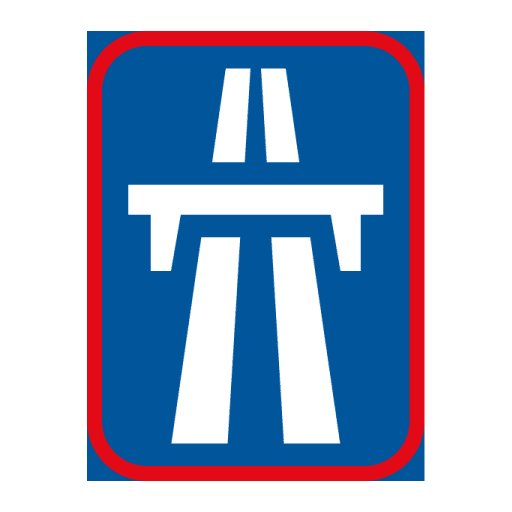
This sign means

Diagram for question 1 of Zimbabwe VID test paper 10
  1. ABridge ahead
  2. BDual carriage free way begins here
  3. CThe road narrows ahead
Show the answer

Answer: Dual carriage free way begins here

The blue rectangle with the red border marks the start of a freeway, and the symbol carries two separate carriageways under the bridge, so a dual carriageway freeway begins here and freeway rules apply from this point.
2.

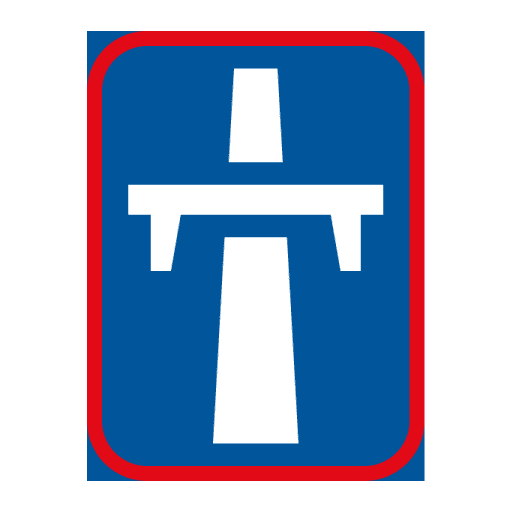
This sign is a:

Diagram for question 2 of Zimbabwe VID test paper 10
  1. ASign of hard road ahead narrowing
  2. BFlyover bridge ahead
  3. CSign that a single carriageway freeway begins here
Show the answer

Answer: Sign that a single carriageway freeway begins here

The freeway symbol here has one carriageway running under the bridge instead of two, so the freeway that begins at this sign is a single carriageway, with oncoming traffic on the same road surface.

3.

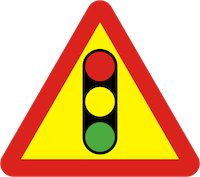
This sign warns us of:

Diagram for question 3 of Zimbabwe VID test paper 10
  1. ARail level crossing ahead
  2. BTraffic light presence ahead
  3. CMalfunctioning traffic light ahead
Show the answer

Answer: Traffic light presence ahead

A red triangle warns, and the symbol inside is a robot with its three lamps, so a robot controls the road ahead. Slow down and be ready to stop. A rail crossing would show a train or the yellow cross sign instead.

4.

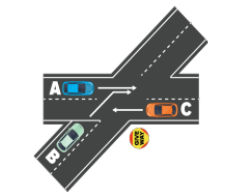
Which car is NOT breaking the law assuming all vehicles are moving?

Diagram for question 4 of Zimbabwe VID test paper 10
  1. ACar A
  2. BCar C
  3. CCar B
Show the answer

Answer: Car A

Car A is running straight ahead along the through road on its correct side of the broken line, so nothing in the picture obliges it to stop. Car B is coming out of the minor road at the junction, and the car from the east has a give way sign on the kerb beside it.

5.

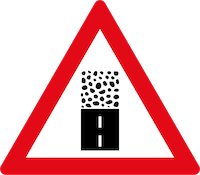
What does this sign warn of?

Diagram for question 5 of Zimbabwe VID test paper 10
  1. ABad tarred road ahead
  2. BRoad markings faded in the road ahead
  3. CTarred road about to end and gravel road ahead
Show the answer

Answer: Tarred road about to end and gravel road ahead

The strip of road inside the triangle changes from smooth tar with a painted line to a surface of loose stones, so the tar ends and gravel begins. Slow down before the join: braking and steering both go vague on loose gravel.

6.

When travelling in a bus:

  1. AYou can dispose your litter through the window
  2. BDispose your litter under the seats
  3. CHold on to your litter until you can dispose of it properly.
Show the answer

Answer: Hold on to your litter until you can dispose of it properly.

Hold on to it until you are off the bus and can put it in a bin. Anything thrown from a window becomes a hazard for the road user behind, and littering is an offence in its own right.

7.

When stopping a motor vehicle on a road except in traffic, where will you stop?

  1. AOn the extreme right of the road
  2. BStop in the middle if it is safe to do so
  3. COn the extreme left of the road or in an authorized parking place
Show the answer

Answer: On the extreme left of the road or in an authorized parking place

Stop as close as you can to the left edge of the road, or in a marked parking place. Stopping on the right or near the middle leaves your vehicle where no other driver expects to find a car standing still.

8.

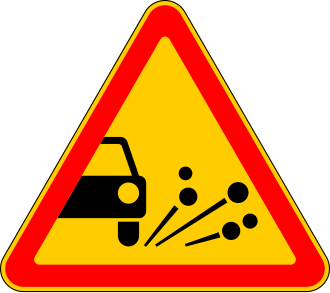
This sign warns of:

Diagram for question 8 of Zimbabwe VID test paper 10
  1. ADanger to the right rear wheel
  2. BWater pools in road ahead
  3. CLoose stones in road ahead
Show the answer

Answer: Loose stones in road ahead

The car in the triangle is throwing stones out from under its wheels, so there are loose stones on the road ahead. Drop your speed and leave a bigger gap: a stone flicked up by the vehicle in front is what breaks a windscreen.

9.

Who is exempted from wearing a seat belt?

  1. ALearner driver
  2. BDriving instructor
  3. CAmbulance driver during the course of work
Show the answer

Answer: Ambulance driver during the course of work

An ambulance driver is exempted while working, because the job means getting in and out of the vehicle constantly at the roadside. A learner and an instructor belt up like everybody else.

10.

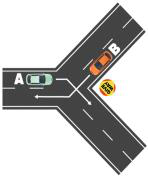
Which car goes first?

Diagram for question 10 of Zimbabwe VID test paper 10
  1. ACar A
  2. BCar B
  3. CCar C
Show the answer

Answer: Car A

A give way sign faces the road the orange car is coming down, so B gives precedence to the road it is joining. B turns right into the road Car A is on, and A is coming along that road and bearing right into the road B has come down. Car A goes first.

11.

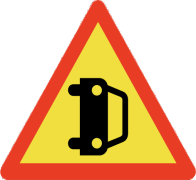
At this sign I am

Diagram for question 11 of Zimbabwe VID test paper 10
  1. AWarned of accident ahead
  2. BWarned of black spot ahead
  3. CWarned of slippery road ahead
Show the answer

Answer: Warned of accident ahead

The triangle shows one vehicle bent into the back of another, so it warns of an accident ahead. Slow down, expect a queue, people on foot and possibly a blocked lane, and be ready to stop.

12.

Which statement is appropriate?

  1. AI may not wear a seatbelt where a vehicle has air bags
  2. BI should pull down the sun visor when dazzled by headlights
  3. CThere is road signage to warn of possibility of congestion
Show the answer

Answer: There is road signage to warn of possibility of congestion

Signs do warn of likely congestion, so you can lift off early instead of arriving at the back of a stationary queue. A belt is worn whether or not the car has air bags, and a sun visor does nothing about headlights at night: slow down and look at the left edge of the road.

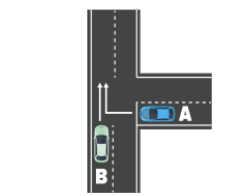
13.

In an urban area, which car has NO right of way?

Diagram for question 13 of Zimbabwe VID test paper 10
  1. ACar A
  2. BThe one which enters the intersection first
  3. CCar B
Show the answer

Answer: Car A

Car A is coming out of the side road on the right and turning onto the main road, while Car B is already on the main road and going straight on. A vehicle joining a road gives way to the traffic already using it, so Car A is the one without right of way.

14.

Which statement is true?

  1. AWe have speed limit for gravel roads
  2. BWe have a clear legal driver's licence class for pedal cyclists.
  3. CSteering backlash not to exceed 12,5% of steering wheel circumference
Show the answer

Answer: Steering backlash not to exceed 12,5% of steering wheel circumference

Free play at the steering wheel must not go beyond 12,5% of the wheel's circumference, and more than that fails the vehicle. There is no licence class for pedal cyclists, and speed limits are set by the road and the vehicle rather than by the surface.

15.

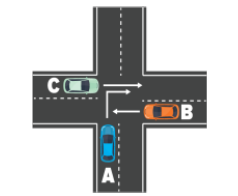
Which car moves FIRST at this intersection?

Diagram for question 15 of Zimbabwe VID test paper 10
  1. ACar A
  2. BCar C
  3. CCar B
Show the answer

Answer: Car B

Car B comes from the east and drives straight through, and the arm on its right is empty, so nobody has priority over it. Car A is turning right out of the south arm and has Car B on its right, and Car C from the west has Car A on its right.

16.

Which statement is not appropriate?

  1. AMotor cycles are exempted from being fitted with a rearview mirror
  2. BAll motor vehicles must be fitted with rear view mirror(s)
  3. CSun visors are mandatory for all motor vehicles
Show the answer

Answer: Sun visors are mandatory for all motor vehicles

A sun visor is not compulsory equipment, so that claim is the one that does not hold. A rear view mirror is a different matter: a driver has to be able to see the road behind without turning round.

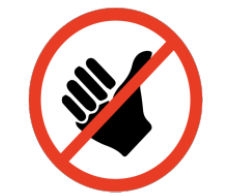
17.

This sign regulates that:

Diagram for question 17 of Zimbabwe VID test paper 10
  1. ANo stopping
  2. BHitch hiking allowed
  3. CHitch hiking prohibited
Show the answer

Answer: Hitch hiking prohibited

A red circle with a bar through the symbol forbids what the symbol shows, and the symbol is a raised thumb, so hitch hiking is prohibited on this stretch. Asking for a lift there puts people on the edge of moving traffic.

18.

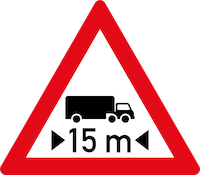
The sign warns of:

Diagram for question 18 of Zimbabwe VID test paper 10
  1. AWidth restriction warning
  2. BWidth restriction of 15m
  3. CWarns of length restriction of 15m
Show the answer

Answer: Warns of length restriction of 15m

The arrows point towards each other along the truck and trailer, measuring it end to end, so the 15 m is a limit on length and nothing longer than 15 metres may go on. A width restriction is measured across the vehicle, not along it.

19.

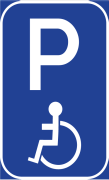
This sign is:

Diagram for question 19 of Zimbabwe VID test paper 10
  1. ASeat reserved for disabled
  2. BLane reserved for disabled
  3. CParking for vehicles of disabled
Show the answer

Answer: Parking for vehicles of disabled

The blue plate carries the parking P above the wheelchair symbol, so it reserves parking for the vehicles of disabled people. It marks a parking bay, not a seat and not a running lane.

20.

Holding a class 4 & 5 driver's licence means I am qualified to drive:

  1. AAgricultural tractor and small car
  2. BSmall car and coupe imp
  3. CSmall car and vintage vehicles
Show the answer

Answer: Agricultural tractor and small car

Class 4 is the light motor vehicle, the ordinary small car, and class 5 is the agricultural tractor, so that pair is what the licence covers. In the new system they are code B and code BÊ. Coupes, imps and vintage cars are body styles, not classes.

21.

This sign indicates that:

Diagram for question 21 of Zimbabwe VID test paper 10
  1. ABuses may reverse
  2. BLane reserved for buses
  3. CBuses keep right
Show the answer

Answer: Lane reserved for buses

The blue plate shows a bus above a large R, and the R marks a lane reserved for the class of vehicle drawn above it, so this lane is for buses. Other traffic keeps out of it while the reservation is in force.

22.

Which statement is true with regard to overtaking?

  1. AYou must overtake if visibility is bad
  2. BYou must not overtake in the face of oncoming traffic
  3. CYou are prohibited from overtaking at night
Show the answer

Answer: You must not overtake in the face of oncoming traffic

Never begin an overtake into oncoming traffic. You need enough clear road to pull out, pass and get back in without the other driver having to brake. Poor visibility is a reason not to overtake, and overtaking at night is allowed where it is safe.

23.

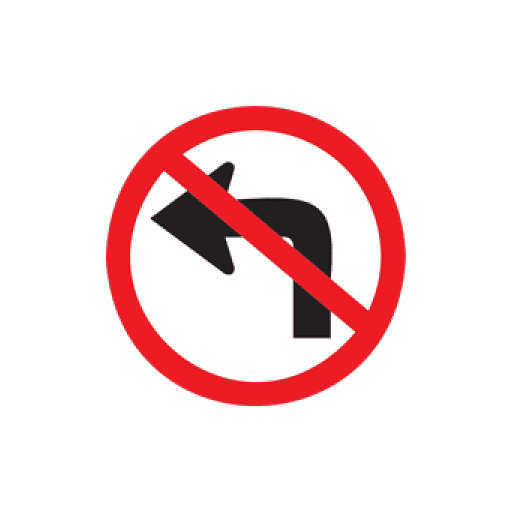
This sign regulates that:

Diagram for question 23 of Zimbabwe VID test paper 10
  1. ACutting corners prohibited
  2. BLeft turn not allowed
  3. CSharp curve no longer applies
Show the answer

Answer: Left turn not allowed

The arrow inside the red circle bends to the left and the bar runs through it, so a left turn is not allowed here. Carry on and take the next turning that is legal.

24.

Which rule is not true for pedal cyclists?

  1. AAvoid towing or being towed
  2. BSit only on the saddle of your cycle
  3. CNever worry about keeping both feet on the pedal
Show the answer

Answer: Never worry about keeping both feet on the pedal

Both feet belong on the pedals: they are the rider's control of speed and balance, so a rule telling a cyclist not to worry about that is the one that is not true. Keeping off a tow and sitting only on the saddle are genuine rules.

25.

Warning reflective T plates sign are fitted on a

  1. ATowed trailer
  2. BTowed broken down motor vehicle
  3. CDrawing motor vehicle
Show the answer

Answer: Towed trailer

The T stands for trailer, and the reflective plate goes on the trailer that is being towed, so a driver coming up behind knows the rear of the vehicle ahead is a trailer and not the back of a car.

Practise on your phone

The app sets the same 16 papers, keeps every attempt, gathers the questions you keep missing into a revision set, and works with no network.