Provisional - Zimbabwe Highway Code, Road Signs & VID Test Prep & lessons

Test 7

Twenty five questions from the 2026 paper, in the order they are set. Read them with the answers, or practise the paper and have your answers marked.

Practise this paper online

Questions
25
Pass mark
22
Practise this paper

Marked at the end, then every answer is shown.

All 25 questions in Test 7

The paper as it is set. Open the fold under a question to read its answer and why that answer is right, or practise the paper and have your answers marked.

1.

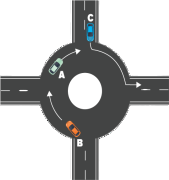
Which car goes last?

Diagram for question 1 of Zimbabwe VID test paper 7
  1. ACar B
  2. BCar A
  3. CCar C
Show the answer

Answer: Car C

A traffic circle: the green car is already round on the west side and the orange car is entering from the south, while Car C waits on the north arm. You give way to traffic already on the circle and to traffic on your right, and both are ahead of it, so Car C goes last.
2.

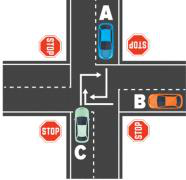
Which car goes last?

Diagram for question 2 of Zimbabwe VID test paper 7
  1. ACar C
  2. BCar B
  3. CCar A
Show the answer

Answer: Car B

All four approaches carry a stop sign, so it is first to stop, first to go. The blue car on the north arm and the green car on the south arm are already at their lines while Car B is still short of its line on the east arm, so it stops last and moves off last.

3.

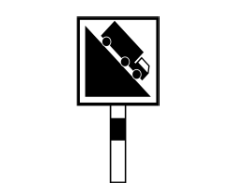
When approaching this sign I should:

Diagram for question 3 of Zimbabwe VID test paper 7
  1. ADisengage gears.
  2. BEngage high gear
  3. CEngage a lower gear
Show the answer

Answer: Engage a lower gear

The sign shows a lorry on a steep downhill, so a steep descent is ahead. Engage a lower gear before you start down and let the engine hold the vehicle back. Riding the brakes the whole way overheats them and they fade just where you need them.

4.

When travelling behind another vehicle at night I must:

  1. ASwitch on my spot lights and sidelights
  2. BSwitch on dipped headlights
  3. CSwitch on my full beam
Show the answer

Answer: Switch on dipped headlights

Switch to dipped headlights. Full beam bounces off the mirrors of the vehicle in front and blinds its driver, so you dip as soon as you come up behind another vehicle. Side lights and spot lights do not light the road properly and are no substitute.

5.

You may legally block an intersection:

  1. AWhen you enter the intersection on the green light
  2. BDuring rush hour traffic
  3. CUnder no circumstances
Show the answer

Answer: Under no circumstances

Under no circumstances. If the traffic beyond the intersection is not moving you hold back behind the line even on a green, because a vehicle standing across an intersection blocks every other direction and no robot can clear it.

6.

A transverse yield or stop line at a pedestrian crossing

  1. AHas same effect
  2. BHas differing effect
  3. CIs for confusing the learner driver
Show the answer

Answer: Has same effect

The two have the same effect. Whether the transverse line at a pedestrian crossing is painted as a yield line or as a stop line, it marks where you wait, and you may not move until the people on the crossing are clear.

7.

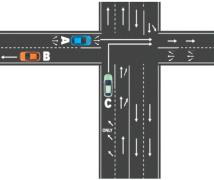
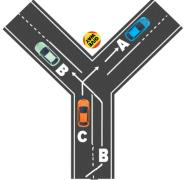
At an uncontrolled intersection which car is breaking the law?

Diagram for question 7 of Zimbabwe VID test paper 7
  1. ACar B
  2. BCar C
  3. CCar A
Show the answer

Answer: Car C

Car C sits in the far left lane, and that lane is painted with a bent arrow and the word ONLY, so a left turn is all it allows. Car C turns right out of it instead, across the lane beside it and across Car A's path. A lane marked ONLY may be used only for the movement painted in it.

8.

Which of the following vehicles is not subject to carrying a fire extinguisher?

  1. AA motor vehicle which is not yet registered
  2. BA public service vehicle which is not carrying passengers
  3. CA motor cycle
Show the answer

Answer: A motor cycle

A motor cycle. The fire extinguisher requirement falls on motor vehicles, and a public service vehicle must carry one whether or not it has passengers in it that day, but a motor cycle is not caught by it.

9.

A motor vehicle towing two trailers should carry

  1. A6 breakdown triangles
  2. B3 breakdown triangles
  3. C2 breakdown triangles
Show the answer

Answer: 6 breakdown triangles

Six. Each unit needs its own pair of triangles, and a drawing vehicle with two trailers behind it counts as three units, so three pairs, six triangles in all.

10.

Breakdown triangles should be placed within

  1. A20 - 45 meters from the nearest point of the breakdown vehicle
  2. B30 - 50 meters from the nearest point of the breakdown vehicle
  3. C25 - 60 meters from the nearest point of the breakdown vehicle
Show the answer

Answer: 30 - 50 meters from the nearest point of the breakdown vehicle

Between 30 and 50 metres from the nearest point of the broken down vehicle. Closer than that and a driver coming up behind has no room to slow down; further and the warning no longer reads as belonging to your vehicle.

11.

To drive a motor omnibus you must have reached the age of

  1. AEighteen years.
  2. BTwenty years and medically fit
  3. CTwenty- five years
Show the answer

Answer: Twenty- five years

Twenty five is what this paper marks. A motor omnibus carries the public, so the law asks for more years behind the wheel. Since January 2025 it asks for thirty and five years of driving, so where thirty is offered, pick thirty. A bus licence is now one of the D codes.

12.

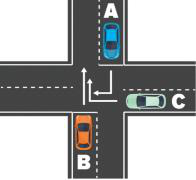
Which car moves first at this intersection?

Diagram for question 12 of Zimbabwe VID test paper 7
  1. ACar A
  2. BCar C
  3. CCar B
Show the answer

Answer: Car C

The blue car on the north arm is turning right, so it gives way to everything crossing its path. The orange car coming north gives way to Car C, which is on its right. That leaves Car C free, and it moves first.

13.

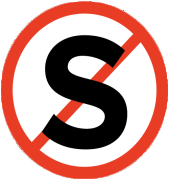
At this sign

Diagram for question 13 of Zimbabwe VID test paper 7
  1. APrevious speed is cancelled
  2. BStopping is prohibited
  3. CSpeeding is restricted
Show the answer

Answer: Stopping is prohibited

A black S in a red circle with a red bar through it is the no stopping sign. You may not stop on that length of road at all, not even for a moment to set someone down, which makes it stricter than a no parking sign.

14.

When travelling at 75 km/h I must leave a gap of

  1. AFour vehicle lengths.
  2. BSeven vehicle lengths
  3. CFive vehicle lengths
Show the answer

Answer: Five vehicle lengths

Five vehicle lengths. The gap is one vehicle length for every 15 km/h, and 75 divided by 15 is five. It grows with speed because the faster you travel the further you cover while you are still reacting.

15.

Which car stops?

Diagram for question 15 of Zimbabwe VID test paper 7
  1. ACar C
  2. BCar A
  3. CCar B
Show the answer

Answer: Car A

Two roads join into one. The orange car is coming down the left hand road and is on Car A's right where they meet, so Car A gives way and stops. The blue car is already away down the joined road and takes no part in it.

16.

Which of the following vehicles does not need reverse gears?

  1. AA tractor towing two trailers
  2. BA motor cycle
  3. CA combine harvester in a field
Show the answer

Answer: A motor cycle

A motor cycle. Every other motor vehicle must have a reverse gear; a motor cycle is light enough to be walked backwards, so it is the one that is excused.

17.

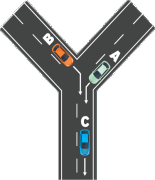
Which car is breaking the law?

Diagram for question 17 of Zimbabwe VID test paper 7
  1. ACar A
  2. BCar C
  3. CCar B
Show the answer

Answer: Car B

The fork carries a give way sign on the island. Car B, the green car on the left hand road, is sitting in the half of that road kept for traffic leaving the junction, so it is on the wrong side of the road, facing whatever comes out.

18.

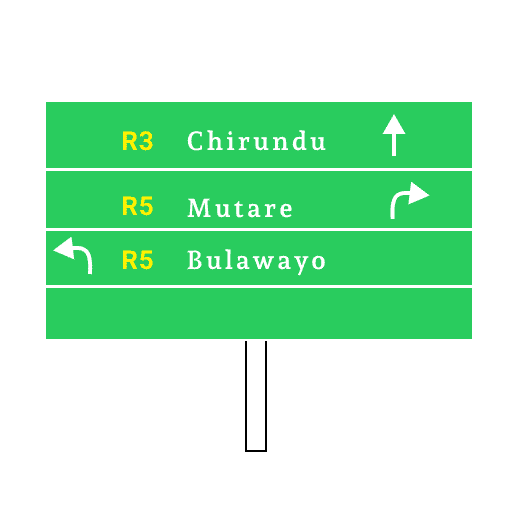
Into which grouping of road signs does this sign fall?

Diagram for question 18 of Zimbabwe VID test paper 7
  1. AA location sign
  2. BA direction sign
  3. C3 way road sign
Show the answer

Answer: A direction sign

A direction sign. It is the green board with route numbers and place names, R3 Chirundu straight on, R5 Mutare to the right and R5 Bulawayo to the left, telling you which way to go for each place.

19.

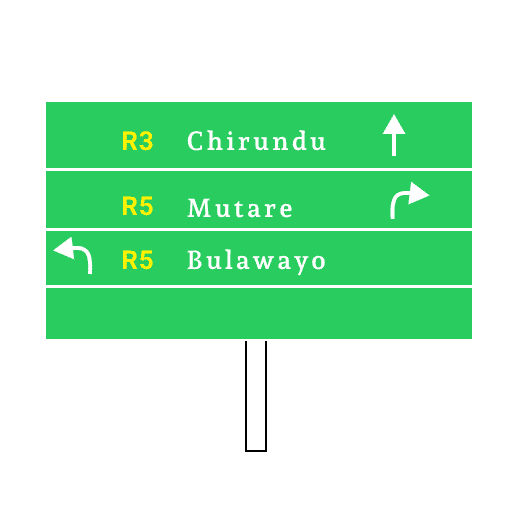
This road sign

Diagram for question 19 of Zimbabwe VID test paper 7
  1. AIs for warning
  2. BIs for information
  3. CHas a regulatory effect
Show the answer

Answer: Is for information

A green board listing Chirundu straight on, Mutare to the right and Bulawayo to the left. A sign like that only tells you where places are, so it is for information. It warns of no hazard and orders you to do nothing.

20.

If involved in a serious accident I must

  1. AReport to hospital within the next 24 hours
  2. BReport to police within 48 hours
  3. CReport to police as soon as possible, or within 24 hours.
Show the answer

Answer: Report to police as soon as possible, or within 24 hours.

Report to the police as soon as possible, and in any event within 24 hours. It is the police who must be told, not a hospital, and 48 hours is already too late.

21.

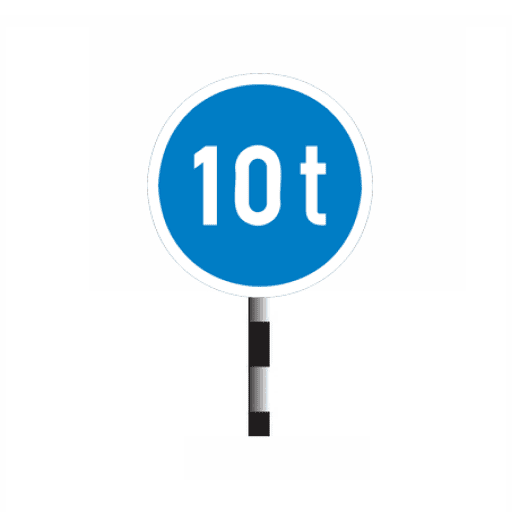
This sign indicates

Diagram for question 21 of Zimbabwe VID test paper 7
  1. AHeight restriction
  2. BWeight restriction
  3. CSpeed restriction
Show the answer

Answer: Weight restriction

The sign is a blue circle reading 10t, a mass in tonnes, so what it deals with is weight, not height and not speed. A blue circle commands rather than forbids: this section of road is set aside for vehicles over that mass. The sign that keeps heavier vehicles out has a red border.

22.

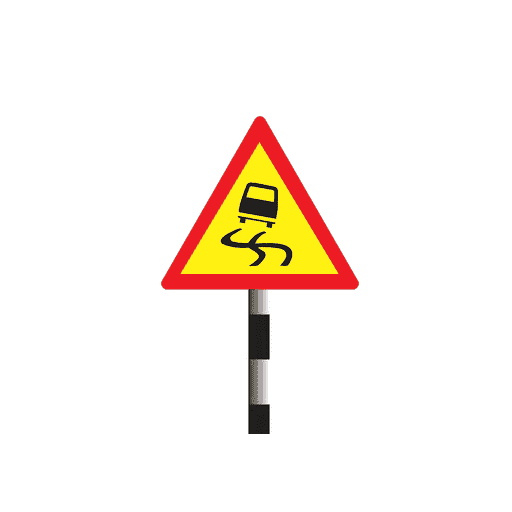
Seeing this sign, I would

Diagram for question 22 of Zimbabwe VID test paper 7
  1. AIncrease my speed if there is no congestion
  2. BReduce speed
  3. CPark my car because the ground is wet
Show the answer

Answer: Reduce speed

The red triangle with a car and skid marks under it warns of a slippery road ahead. Reduce speed before you reach it, then brake and steer gently and leave a bigger gap. The surface is only dangerous at the speed you carry into it.

23.

How many classes of driver's licences do we have in Zimbabwe?

  1. AFive
  2. BFour
  3. CSix
Show the answer

Answer: Five

Five. A Zimbabwean driver's licence was issued in one of five classes, and this paper marks five. Since 2023 the new system names the same vehicles by codes instead, so a licence issued now says code B where an older one says class 4.

24.

When driving at 120km/h your total stopping distance is?

  1. A80 meters
  2. B100 meters
  3. C130 meters
Show the answer

Answer: 130 meters

The total is 130 metres. At 120 km/h you cover roughly 17 metres before you even begin to react, and the braking itself takes well over 100 more, so the whole distance runs far past what most drivers picture.

25.

The reaction distance at 60km/h is?

  1. A12.4 meters
  2. B5.6 meters
  3. C8.3 meters
Show the answer

Answer: 8.3 meters

The reaction distance is 8.3 metres. Reaction takes about half a second, and at 60 km/h you are travelling 16.7 metres every second, so that half second carries you 8.3 metres before the brakes have done anything at all.

Practise on your phone

The app sets the same 16 papers, keeps every attempt, gathers the questions you keep missing into a revision set, and works with no network.