Multi-lane carriageways
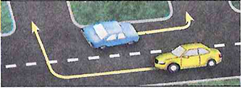
Where your side of the road is divided into lanes by markings, choose the proper lane for your route and stay in it until you have good reason to move to another. On a road with two or more lanes running the same way, keep left and move right only to overtake or to turn right. Never drive on the crown of the road.
Do not cut in from one lane to another, even when the traffic in your own lane has slowed down, and do not jump lanes in anticipation of overtaking. Make sure the road is clear first.
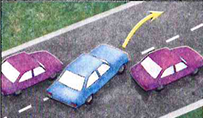
The drill for changing lane runs in one order: mirror, blind spot, signal, manoeuvre.
- Satisfy yourself that the move is safe and will not inconvenience other traffic.
- Check where the traffic behind you is.
- Check the blind spot, the strip of road beside you that no mirror covers, by turning your head.
- Signal that you are moving over to the left or to the right, and hold the signal long enough for it to be understood.
- Then move across once, smoothly.
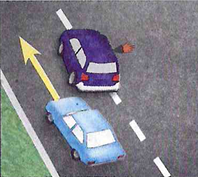
Traffic movement is more complicated near junctions, so read the intentions of the vehicles ahead of you as well as those behind you, and take your position early rather than at the last moment.
Overtaking is on the right. That rule is relaxed where your side of the road has two or more traffic lanes, or where the driver ahead has signalled a right turn. Even then, do not pass on the left if it would put you on the road shoulder or take you into any part of an occupied lane. Never overtake on the shoulder.
At a box junction, do not enter the box until the exit road or lane you want is clear. A vehicle stopped inside it blocks the traffic crossing its path.
Where a driver behind wants to pass, give them the chance by moving carefully to the left within your lane and holding a constant speed. Speeding up while somebody is alongside you is how an overtake becomes a head-on collision.