Lines and lane markings
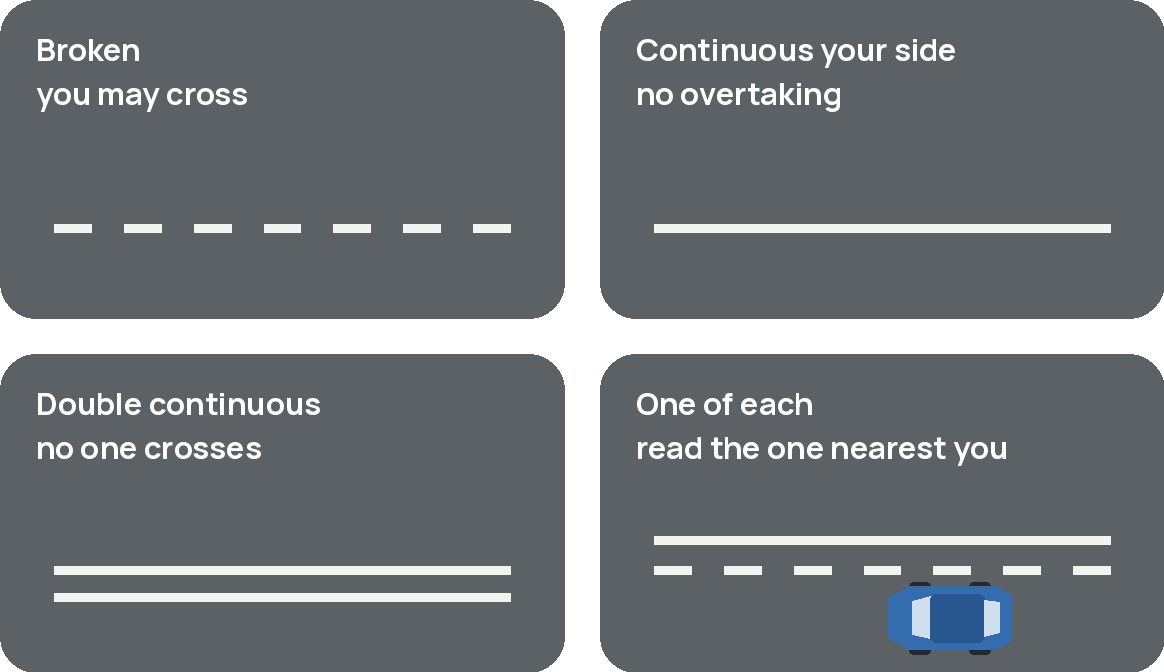
Road markings are instructions painted on the road surface, and the one that governs you is always the one on your own side of the centre.
White lines run along the direction of travel. They mark the centre of the road or divide it into lanes, and they are not to be straddled.
- A broken white line is there to guide you. You may cross it to overtake or to turn off, but only when you are satisfied that it is safe.
- A continuous white line may not be crossed, however clear the road ahead looks.
- Where a broken line runs beside a continuous one, read the line nearest you. Broken on your side, you may cross when the road is clear. Continuous on your side, you may not.
- Two continuous lines side by side, or two separated by a broken line, mean that no vehicle crosses them or is driven to the right of them.
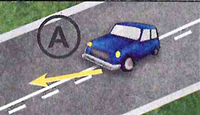
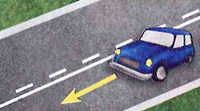
The line turns continuous where the view runs out, on a rise and on a bend, because there is not enough sight distance for two drivers to get out of each other's way. Crossing it in the face of oncoming traffic is the collision the marking exists to prevent.
Yellow marks the edge of the road and the space beside it.
- A broken yellow line may be crossed or straddled for two purposes only: to let a vehicle that is turning right go past you, and to stop.
- A continuous yellow line is a prohibition. It reserves the space beside it at a fire hydrant, a bus stop or an unloading zone, and you neither cross it nor stop on it.
A line running across your lane is a stop line. Do not cross it until you have complied with the sign or signal that controls you there. A stop sign used with a stop line means stopping immediately behind the line, not somewhere near it.
Arrows painted between longitudinal lines must be obeyed. Yellow arrows are regulatory, so an arrow that says left means the lane turns left. White arrows only inform. Parking bays are marked in white. Yellow on a kerb or bay means stopping or parking there is restricted or forbidden.