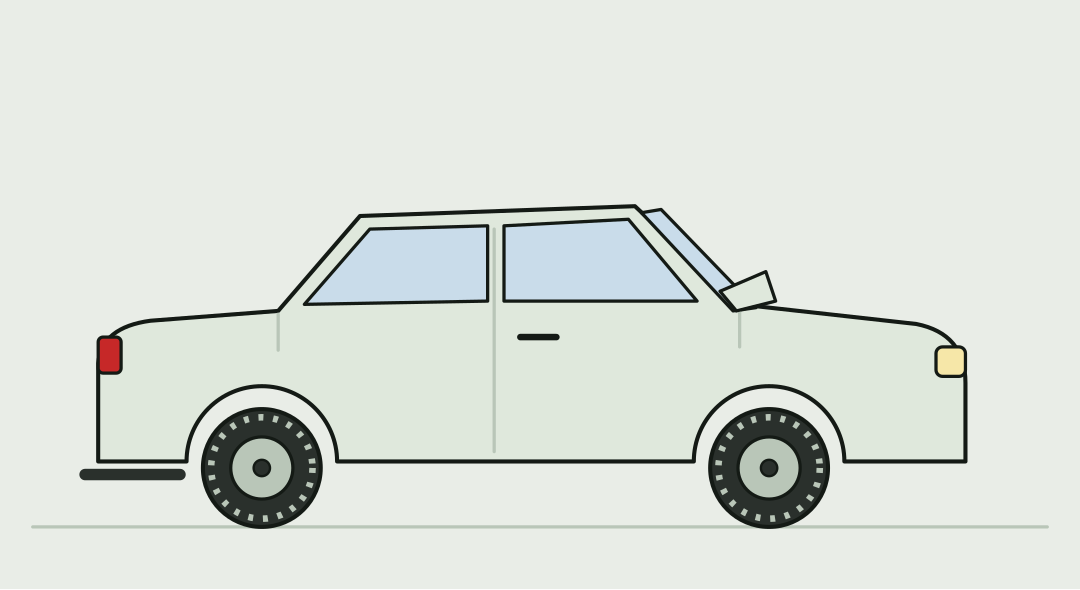
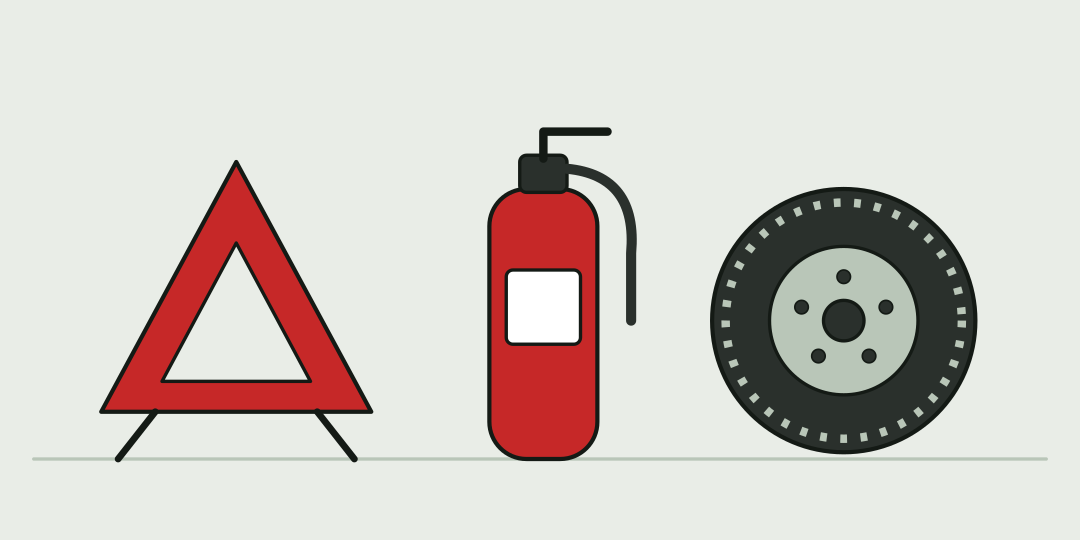
11 terms. The drawings number each part, and every term has its meaning below.
The lid at the front of a car that covers the engine.
Number 1 on a car from the side.
Also called wipers.
The big window in front of the driver. The wipers are the arms that wipe rain off it.
Number 2 on a car from the side. In the papers: 1 question, first in Test 12.
The space at the rear of a car for luggage, and its lid.
Number 4 on a car from the side.
The pattern of grooves cut into a tyre. It grips the road, above all when the road is wet. It must be at least 1 mm deep.
Number 5 on a car from the side. In the papers: 2 questions, first in Test 11.
Also called silencer.
The pipe that carries the used gases away from the engine. The silencer in it keeps the noise down.
Number 6 on a car from the side.
Also called red reflective triangle.
A red triangle that shines in headlamps. It is stood on the road to warn of a broken down vehicle.
Number 1 on kept in the car. In the papers: 8 questions, first in Test 2.
A canister for putting out a fire. Motor vehicles carry one. A motor cycle does not have to.
Number 2 on kept in the car. In the papers: 2 questions, first in Test 7.
An extra wheel with its tyre, carried to take the place of one that is damaged.
Number 3 on kept in the car. In the papers: 1 question, first in Test 3.
Also called seat belt.
The strap that holds you in your seat in a collision. Safety belt and seat belt are the same thing.
In the papers: 6 questions, first in Test 5.
The weight of a vehicle when it is empty, with no load and no passengers.
In the papers: 1 question, first in Test 11.
Also called number plates.
The plates at the front and rear that carry the number of the vehicle.
In the papers: 1 question, first in Test 15.
Every term an explanation uses opens its drawing and meaning right there, beside the question that asks about it.